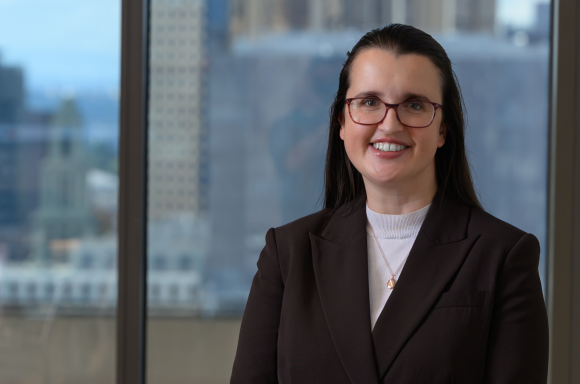
Julia Heyward, a senior associate in Arnold Bloch Leibler’s employment and workplace advisory practice, advises a diverse range of clients across the gamut of ever-changing workplace issues. Having started with ABL as a graduate, Julia recently returned to the firm following a year working with Victoria Legal Aid, where she advised clients navigating complex and often very personal experiences in the workplace.
You've progressed at ABL from starting out as a grad to now being appointed Senior Associate. What do you see as the advantages of advancing your career in this way within the one firm and, specifically at ABL?
Progressing from graduate to Senior Associate within the same firm has given me a strong sense of continuity in my development. I’ve been able to build deep relationships with clients and colleagues, see matters through and develop a more holistic understanding of both the legal and commercial context our clients operate in. At ABL, one of the key advantages is the firm’s culture and the quality of work. As an employment lawyer, our clients usually come to us for very sensitive, high stakes and time-critical matters which requires a lot of trust. There’s a real emphasis in the firm on collaboration and taking responsibility early in your career, which has allowed me to grow quickly.
You recently returned to ABL after a year away working with Victoria Legal Aid. What areas of employment and workplace law did you focus on in your role there? What do you think you you’ll bring from the experience to your work back at ABL?
My focus was on sexual harassment and discrimination matters, and I worked with clients navigating complex and often very personal experiences in the workplace. This included advising on complaints, supporting matters through conciliation and court processes, and helping clients understand their rights and options. The experience was incredibly valuable, and it sharpened my ability to approach sensitive issues with both technical precision and empathy. Bringing that back to ABL, it has strengthened my understanding of risk, culture and compliance from both an employer and employee perspective, particularly in relation to workplace conduct.
“There’s a real emphasis in the firm on collaboration and taking responsibility early in your career, which has allowed me to grow quickly.”
Workplace issues have changed dramatically since you started at ABL in 2019. How would you describe the trajectory?
What I love about this area of law is that there is no “typical” day because our work is so varied and constantly evolving with the legal landscape. Workplace law has shifted significantly since I have been practising. There has been a strong move toward increased regulation and worker protection, driven by the rise of gig and platform work, the impact of COVID-19, and changing expectations around flexibility. For example, recent reforms have imposed limits on fixed-term contracts, introduced new laws to address workplace sexual harassment, increased the regulation of gig economy workers, and introduced the right to disconnect. The focus by the Fair Work Ombudsman on wage compliance has also increased, with the flow on effect being that this has become a key feature in the employment aspects of commercial transactions.