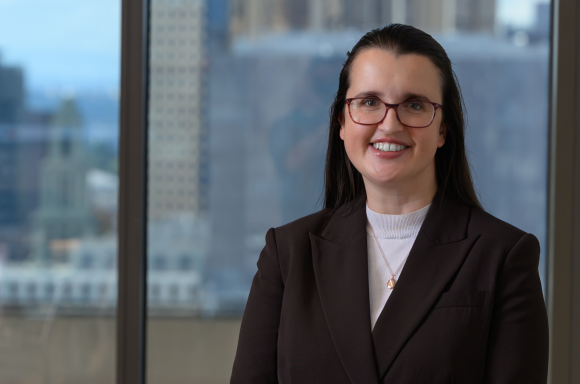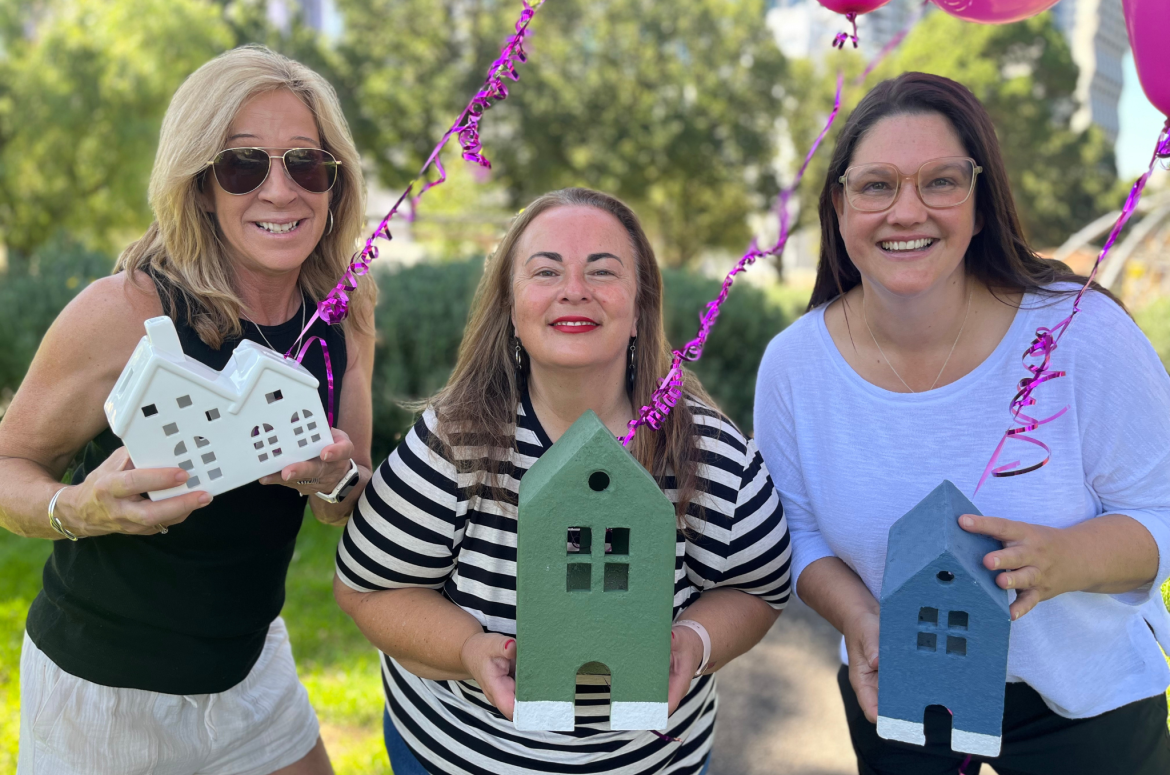
For almost 80 years, Prison Network has stood alongside Victorian women in and beyond prison, providing the support and courage they need to navigate positive pathways and create change. We spoke to CEO Amelia Pickering about the improvements and persistent problems in the Victorian corrections system, the network’s priorities, and how its volunteers and partners are challenging stereotypes.
The Prison Network was founded in 1947. How has the justice system changed for women over that time? What hasn’t yet changed that still needs to?
Put simply, the more we know, the more able we are to do better, so there's certainly been some gradual, positive shifts since our founder, Myrtle Breen, first visited Pentridge Prison as an idealistic 18-year-old. It was a horrible, dark and terrible place.
By 1956, after persistent lobbying from activists like Dame Phyllis Frost, demanding that women be separated from the male-dominated facility, they were moved to a newly build female prison in Fairfield. Decades later, in 1996, it was also acknowledged that high and low security prisoners should have separate facilities, and the Dame Phyllis Frost Centre was opened as maximum security women’s prison
I think the most important change has stemmed from greater research into the backstories of women in prison, which has made the system become more trauma-informed. We know that 9 out of 10 women in prison have been a victim of violence or other abuse. Around 40% have experienced homelessness and/or mental health issues.
How did you become involved in the network and why?
I'm originally from South Africa, a country where poverty and advantage are evident right alongside each other. So, moving to Australia, it took me a while to work out where I could make a contribution because on the surface it seemed that everyone's got it together here.
Six years ago, I was working in Aboriginal Torres Strait Islander health research in Darwin and a I got a phone call from a friend about the prison network looking for a new CEO. My first instinct was, I don't know if that's for me. But when I started doing the research and realised the statistics around who these women were and the lack of support they had, I changed my mind.
I knew it was a big, complex, wicked, problem, but it's targeted and tangible enough for me make a difference.
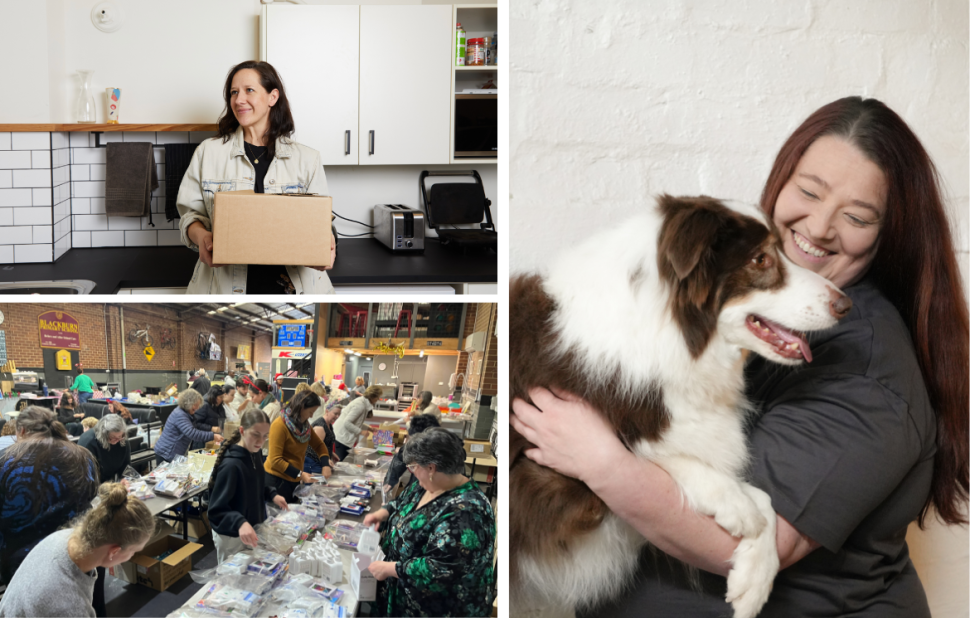
Most of us don’t even consider the challenges faced by women when they are released from prison. What are the most difficult would you say and how is the network able to help women overcome them?
Without question, it’s about getting a job and a home.
From everything we know, this is how to reduce recidivism. And the impact of the Prison Network reinforces that - our rates of recidivism are around 5%, against the state average of over 40%. And that’s because we are really intentional about supporting women find a place to live and a way to pay for it. It's not rocket science.
Because the reality is that no one wants to give you a rental if you've got a criminal record, and no one wants to give you a job if you have to visit your parole officer once a week or go to a pathology centre to get your urine checked. Doors don’t easily open to a woman wearing an ankle bracelet.
Prison Network begins post release support and planning while women are still in prison. We manage five fully furnished units, allowing us to provide housing to women leaving prison, and their dependents.
We call it “wrap around support” because we also help the women find employment, with legal issues and general community reintegration, including finding their own homes after around 12 months.
Tell us about your latest employment initiative, the New Leash dog salon which opens next month.
Up until now, we’ve built as many partnerships as we can with employers to have women placed. We have excellent partnerships with the retailer Kookai, for example, with Stop N Go traffic management and Goddess Cleaning.
Our first social enterprise is a dog grooming salon in Canterbury. It was kind of a no-brainer – you ring around our catchment area and all the salons have six month waiting lists.
But more importantly, it occurred to us that there's something beautiful about the therapeutic nature of working with dogs – they don’t judge.
"Our experience with ABL is the first time we've felt like we're actually paying for the service. We’re never made to feel like second class clients."
Volunteers play a big role in the network. Why do people choose to volunteer in this space and how do they benefit from the experience?
We have around 120 volunteers who work with us, mainly in our in-prison program.
Our theory of change is that we build trust in the prison context, so our volunteers go in and do things that don't sound very groundbreaking, like craft and discussion groups and sports.
We very rarely have to recruit volunteers - people find us. We have older women, who are retired and looking to give something back to the community. Some of our volunteers have had some sort of trauma of their own. And we have young people studying criminology, who are interested in learning more.
Almost all of our volunteers come to a point where they realise that there’s really not much that separates them from the women who are inside. We could have very easily been on that side of the fence, if circumstances had been different.
And the more our volunteers talk about that realisation with friends and family, the more we can break down the stigma.
What value can Arnold Bloch Leibler and your other partners from diverse sectors bring?
Pro bono support is incredibly important, but it can sometimes feel like you’re asking for (and receiving) a favour.
Our experience with ABL is the first time we've felt like we're actually paying for the service. We’re never made to feel like second class clients. Quite the contrary, the team always responds quickly, efficiently and wholeheartedly to everything. We’ve just been blown away.