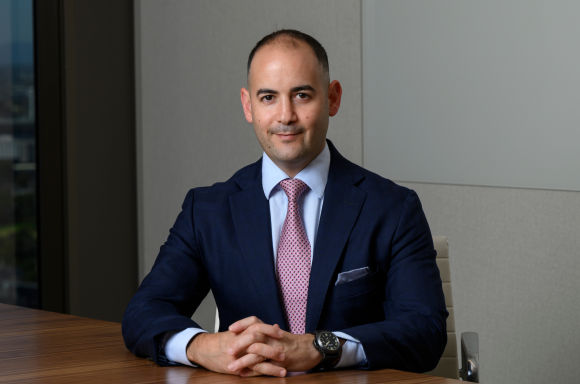
Meet Genevieve Aldridge, a lawyer in our Litigation team in Melbourne. We asked Genevieve to share more about her work, her experience at ABL, and what makes our culture unique. Here’s what she had to say.
What first drew you to ABL?
I joined ABL as a law graduate in 2022, after completing a clerkship in 2021. I was initially drawn to ABL’s approach to training junior lawyers; juniors work directly with partners and take on key roles in complex disputes. Both are amazing opportunities to learn from some of the best in the industry and develop essential skills. Throughout my clerkship, I felt that my values and approach to work aligned well with the firm and was confident that ABL was the right place to start my career in commercial law.
What surprised you most after joining?
ABL is renowned for working on highly complex and challenging matters, and commercial law is generally a competitive environment. What surprised me most about ABL was that, while I was challenged, I was fully supported by both the partners and my colleagues every step of the way.
What areas do you specialise in and what does that look like day to day?
I work on a broad range of commercial litigation matters, including building contract disputes, leasing disputes, trusts and estates disputes, corporate disputes, and, more recently, an international arbitration. Since starting at ABL, I have developed a keen interest in trusts and estates and corporate disputes, particularly those involving the separation of complex private structures.
Day to day, this means researching nuanced legal issues, conferring with counsel and clients, and drafting correspondence and court documents. I can also often be found working with my colleagues in the commercial, tax or property teams, as my work frequently requires cross-practice collaboration.
How have you been involved in public interest and pro bono work at ABL?
Becoming involved in pro bono work at ABL is part and parcel of being an ABL lawyer, and I am proud to have worked on various pro bono matters during my time here. I’m reminded of the significance of this work each time I see a series of prints hanging in the boardroom, which were gifted to the firm by renowned Gurindji artist, academic and leader Professor Brenda Croft.
I was involved in that pro bono matter, in which ABL acted for the Karungkarni Art and Culture Aboriginal Corporation, representing the Gurindji peoples of Wave Hill and surrounding country, in their efforts to lift an embargo against the Berndt Fieldnotes. These notes were created in the 1940s by two eminent anthropologists, Professors Ron and Catherine Berndt, and contain secret, sacred and highly sensitive cultural information belonging to the Gurindji peoples.
Following protected negotiations, the Gurindji reached a historic accord with the University of Western Australia for the release of these materials into the community, through prescribed processes that protect the Gurindji’s agency and empower them to regain control over what belongs to them.
How would you describe the Dispute Resolution & Litigation team’s working style?
Each partner has a slightly different approach to their work, reflective of the nature of their matters. A common theme, however, is that ABL operates with lean teams; often just the partner and one or two juniors. As a junior lawyer, I work closely with the partners and receive direct and immediate feedback throughout the course of a matter.
What is your one piece of advice for lawyers who would like to work with us?
My advice (or rather, two pieces of advice) for lawyers who would like to work at ABL is to speak up and embrace the challenge.
Whether it’s a question about a matter or your view on the legal issues, the partners want to hear from junior lawyers. The work we do, and the level of responsibility given to juniors, provides the opportunity to work on fascinating and complex disputes and to become deeply involved in their intricacies. Leaning into the challenge allows you to both develop your skills and enjoy the work you do.